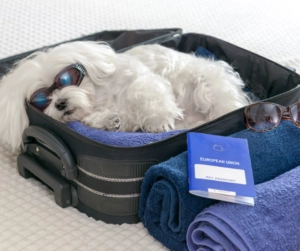
 Preparing your pet for a holiday is essential to ensure their comfort and safety while you’re away. Whether you’re taking your pet with you or leaving them in the care of someone else, here are some steps to consider:
Consult Your Veterinarian
– Schedule a visit to your veterinarian before your trip to ensure your pet is healthy and up to date on vaccinations. Receive 15% off vaccinations for the month of November. Book online here
– Ask for any necessary medications, including those for motion sickness if you’re traveling.
Identification
– Ensure your pet has proper identification, including a collar with an ID tag and a microchip with updated contact information.
Travel Plans
– If you’re traveling with your pet, research pet-friendly accommodations and transportation options.
– Check airline or car travel regulations and book in advance if needed.
– Ensure your pet’s crate or carrier is suitable and meets transportation requirements.
Packing for Your Pet
– Pack your pet’s essentials, including their food, water, dishes, leash, collar, toys, and any necessary medications.
– Consider bringing familiar items like blankets or toys for comfort.
Health Records
– Bring copies of your pet’s health records, including vaccination certificates and any recent medical history.
Emergency Contact
– Provide a trusted friend or family member with your travel itinerary and emergency contact information in case you’re not reachable.
Local Pet Services
– Research local veterinary clinics, pet hospitals, and pet-friendly places at your destination.
Accommodation
– If your pet will be staying with a pet sitter or at a boarding facility, ensure they are familiar with your pet’s routine and any specific needs.
Pet Sitter or Boarding Facility
– If using a pet sitter, provide detailed instructions, emergency contacts, and a schedule for your pet’s care.
– If using a boarding facility, make reservations well in advance, and visit it to ensure it meets your standards.
Comfort and Familiarity
– Bring items that have the scent of your home, like bedding or a shirt, to help your pet feel more comfortable in a new environment.
Safety During Travel
– Secure your pet in the car with a proper restraint system, such as a seatbelt or a pet carrier.
Nutrition and Hydration
– Stick to your pet’s regular diet to avoid digestive problems. Bring enough food and clean water for the trip.
Exercise and Play
– Make sure your pet gets enough exercise before you leave to help them relax during the journey or boarding.
Training and Socialisation
– Ensure your pet is well-trained and socialised to make travel or boarding experiences more comfortable for them and others.
Plan for Return
– Plan your return journey carefully, so your pet can transition back to their regular routine smoothly.
Remember that pets can experience stress during travel or while staying in a new environment, so maintaining their comfort and routines is crucial. By following these steps, you can help make your pet’s holiday experience safe and enjoyable.